Social Media Character & Word Limits: The Complete Platform Guide
Master every social media character limit. Complete reference guide for X (Twitter), LinkedIn, Instagram, TikTok, YouTube, Facebook, and SMS with ideal lengths for engagement.
Nothing kills social media momentum faster than crafting the perfect hook, attaching your media, and hitting "Post" — only to get greeted by an error modal saying you've exceeded the character limit.
Master Social Media Limits at a Glance:
• X (Twitter): 280 characters (Optimal: 70–120 chars)
• Instagram: 2,200 characters (Truncates at 125 chars before "...more")
• LinkedIn: 3,000 characters (Truncates at 140–210 chars; optimal 900–1,500 chars)
• TikTok Description: 2,200 characters (Keyword rich)
• YouTube Title: 100 characters (Optimal: 60–70 chars to avoid mobile truncation)
• Standard SMS: 160 characters (GSM-7 standard)
Every major platform enforces distinct character boundaries. More importantly, there is a substantial difference between the maximum technical limit allowed by a network and the optimal engagement length that generates the highest impressions, shares, and clicks.
Master Social Media Character Limits Table
Quick reference overview for major social networks and digital messaging channels:
| Platform | Asset / Placement | Maximum Character Limit | Optimal Length for Engagement |
|---|---|---|---|
| X (Twitter) | Standard Tweet | 280 characters | 70 – 120 characters |
| X (Twitter) | Direct Message (DM) | 10,000 characters | Under 500 characters |
| Feed Caption | 2,200 characters | 125 characters (before fold) | |
| Profile Bio | 150 characters | 130 – 150 characters | |
| Post Update | 3,000 characters | 900 – 1,500 characters (150–250 words) | |
| Headline | 220 characters | 180 – 200 characters | |
| TikTok | Video Description | 2,200 characters | 100 – 250 characters (keyword rich) |
| YouTube | Video Title | 100 characters | 60 – 70 characters (avoids mobile cutoff) |
| YouTube | Description Box | 5,000 characters | First 150 characters above the fold |
| Status Update | 63,206 characters | 40 – 80 characters | |
| SMS Text | Single Message Segment | 160 characters (GSM-7) | Under 160 characters (avoids multi-part charges) |
1. X (Twitter): 280 Characters & URL Rules
While Twitter expanded from its original 140-character limit to 280 characters in 2017, data consistently proves that punchy, succinct tweets generate the highest retweets and quote rates.
- Links Always Take 23 Characters: Every URL pasted into X is automatically wrapped by the
t.coshortener. Regardless of whether your link is 10 characters or 120 characters long, it consumes exactly 23 characters against your 280-character budget. - X Premium / Long-Form: Subscribed users can draft up to 25,000 characters. However, readers still only see the first 280 characters in their timeline before having to click "Show more".
2. Instagram: 2,200 Characters & The 125-Character "See More" Fold
Instagram permits generous captions up to 2,200 characters with a limit of 30 hashtags. However, user behavior is visual-first:
- The feed preview truncates captions after just 125 characters on mobile screens.
- Place your most critical call to action, question, or emotional hook within those first 125 characters.
- Bio limits are strictly capped at 150 characters. Use line breaks and emojis strategically to summarize your value proposition.
3. LinkedIn: 3,000 Characters for Thought Leadership
LinkedIn has become the world's premier long-form professional publishing feed. You have up to 3,000 characters per post:
- Posts truncate after approximately 140 to 210 characters (3 lines) before the "...see more" button. Your opening sentence must compel the reader to click.
- Research shows that long-form personal stories or analytical frameworks between 150 and 250 words (roughly 900 to 1,500 characters) generate 2.5x more comments and reposts than ultra-short status updates.
4. YouTube & TikTok: Video SEO Character Rules
Both platforms now operate heavily as search engines:
- TikTok Descriptions (2,200 characters): Treat descriptions like mini-blog posts. Incorporate relevant search terms and query phrases to rank in TikTok's algorithm.
- YouTube Titles (100 characters): Desktop displays around 70 characters, while mobile screens cut titles off around 50–60 characters. Always place your main target keyword in the first 50 characters.
5. How Emojis and Character Encodings Count
When drafting posts, remember that character counts are not always equal to the number of visible symbols:
- Standard Letters & Numbers: Count as 1 character in ASCII/UTF-8.
- Emojis: Count as 2 characters in standard UTF-16 encoding. Some complex composite emojis with skin tones or zero-width joiners can count as 4 or more characters.
- Line Breaks (Enter key): Consume 1 character in modern web apps.
Audit Your Posts Before Publishing
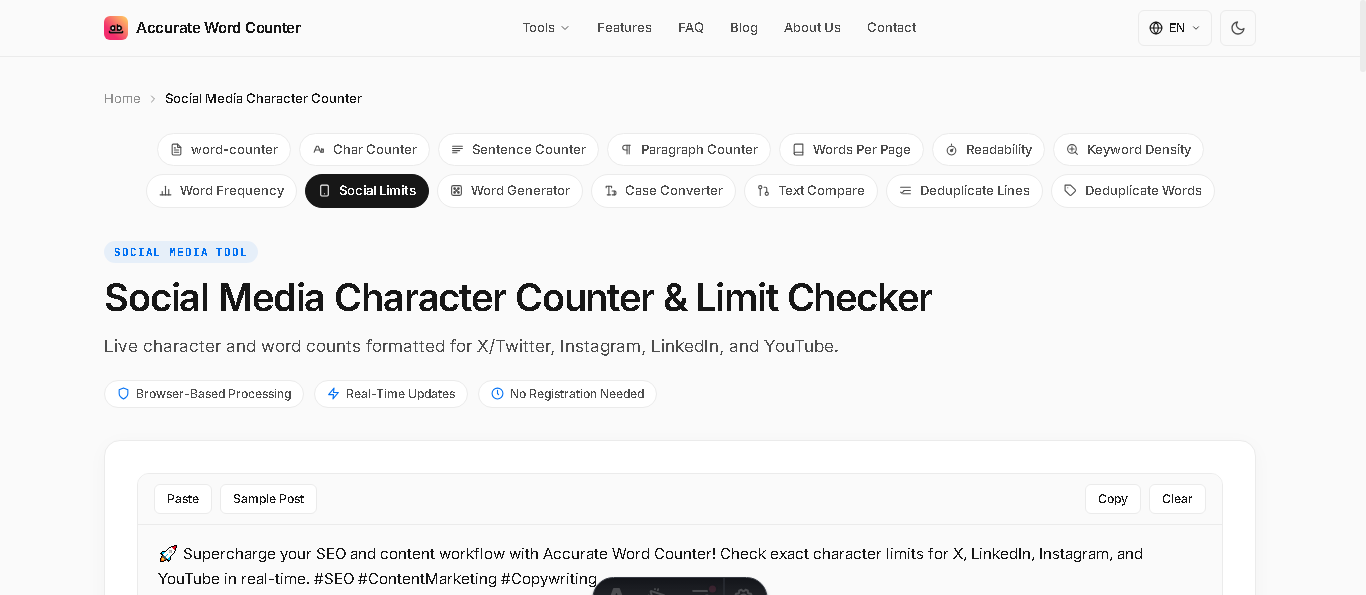
Never guess whether your draft will fit. Use our dedicated Social Media Character Counter or Character Counter to preview your exact limits across all networks with real-time indicators.
Frequently Asked Questions
What is the character limit on X (Twitter)?
The standard tweet character limit is 280 characters for non-subscribers. X Premium subscribers can publish long-form posts up to 25,000 characters.
How many characters can you have in an Instagram caption?
Instagram feed captions allow up to 2,200 characters with up to 30 hashtags. However, captions are truncated after the first 125 characters with a "...more" link.
What is the LinkedIn post character limit in 2026?
LinkedIn allows up to 3,000 characters per text post (roughly 500 to 600 words). Posts truncate in user feeds after roughly 140 to 210 characters (3 lines) before the "...see more" button.
Do emojis count as 1 or 2 characters on social media?
Emojis generally count as 2 characters in standard UTF-16 encoding. Some complex composite emojis with skin tones or zero-width joiners can count as 4 or more code units on platforms that do not use grapheme cluster counting.